[syndicated profile] scalziwhatever_feed

Posted by John Scalzi

HOLY FUCKING SHIT I AM IN THE FUCKING EPSTEIN FILESSpecifically, my essay "Straight White Male: The Lowest Difficulty Setting" is referenced in a 2013 Rachel Sklar article about Muriel Siebert. Why is it in the Epstein files at all? You got me. What a wild fucking discovery. I am literally agog.

John Scalzi (@scalzi.com) 2026-02-03T07:06:50.335Z

To be clear, I did not expect to find myself in the Epstein Files, inasmuch as I have neither ever met nor have ever communicated with Jeffrey Epstein, nor do I hang out with the sort of people who find themselves on the private planes or islands of known sexual traffickers of children — a fact I’m deeply relieved about, if you want the truth of it.

Nevertheless when I learned that the database of the files is searchable, I put “Scalzi” in it to see what would pop up. I expected — and thus was not surprised by — several references to that name, because a banker with that last name handled some of Trump’s accounts at Deutsche Bank several years ago (no relation, as far as I know). But one of the references is indeed to me: Writer Rachel Sklar referenced me in an article she wrote in 2013, which is in the files for some reason, I assume because someone forwarded it to someone else in an email.

And, look: If one must have the appalling fortune to be in the Epstein Files, a one-sentence reference to an essay one wrote, located within another essay, neither about a topic that has anything to do with the exploitation of children, is almost certainly the best-case scenario. But it doesn’t mean I didn’t look at the reference when it popped up and say “oh, fuck” to myself. What a wild, unsettling and unhappy context in which to find one’s self.

So why mention it at all? One, because when people inevitably come across that reference to me in the files and email me about it, I can point them to this as a way to say “Yup, seen it, what a weird fucking thing that is” without having to type it out every single time. Two, I have enough detractors out there that one or more of them will loudly proclaim to their little pals that I am in the Epstein Files, and then slide past the actual context of being referred to tangentially, rather than being an actual participant in atrocities. Pointing this out before they do gives me “first mover” advantage, and the ability to point out what my appearance is actually about. This won’t stop some of them from misrepresenting my appearance, but that’s because they’re sad little weenies. Here’s the actual file I’m in. You can see it for yourself.

Nevertheless, a declaration:

For the absolute avoidance of doubt: Never once ever had anything to do with Jeffrey Epstein or any of his band of heinous child rapists up to and including the current president of the United States. Put them all into prison. Every single one of them. Never let them out.

John Scalzi (@scalzi.com) 2026-02-03T07:06:50.336Z

I trust that will make my position on Epstein and his party pals clear enough.

What a strange and unpleasant time we are living through, nor are we out of it. And once again I have cause to marvel at the weirdness of my own life, that I should show up, even as an aside, as part of one of most horrible political scandals in US history. I would have just as soon sat this one out. But since I can’t, at least I can tell you how I got there.

— JS

[syndicated profile] scalziwhatever_feed

Posted by Athena Scalzi

A shot of my hand holding one of the individual bars so y'all can see the cross section.

Last week, I was having a serious craving for some fresh baked chocolate chip cookies. Between the weather and the world, I really felt like a cookie would help improve my morale.

So, I decided to try out Half Baked Harvest’s recipe for what she calls “Really Good Chewy Chocolate Chip Cookies.” Let’s get right into the process of making them and how they turned out!

Looking at the ingredients list, it’s pretty clear that these are definitely pretty standard cookies made with just everyday household items. Sugar (white and brown), flour, eggs, butter, some vanilla, chocolate, it’s all the usual suspects. Thankfully I didn’t have to go out and buy anything, I could just get right into baking.

The first thing to do was to brown the butter. I was surprised by this step because usually if browning butter is required in a recipe, the food blogger will include such information in the title of the recipe. Like, if I make Binging With Babish’s brown butter chocolate chunk cookies with flaky sea salt, I make a point to mention allll of that.

Anyways, I browned the butter and let it cool off for just a bit while I mixed together the sugars, eggs, and vanilla. Normally I use a stand mixer, but the recipe says that all you need is a bowl and a whisk, and really don’t need an electric mixer. I decided to follow in the spirit of the recipe and keep things simple. Simple ingredients, simple equipment.

After adding the butter (which was still melted but not hot so I didn’t cook the eggs), it was finally time to add the dry ingredients. The recipe calls for 2 cups of flour, and pretty much the second I put in the two cups, I could tell that it was too much flour.

I know what you’re thinking. You’re thinking I packed the measuring cups too full of flour, resulting in extra unaccounted for flour in the mix. I’ll have you know I am a pro, and I spoon all the flour into the measuring cup, resulting in a nice, loose cup of flour rather than a tightly packed one. So it wasn’t my fault (this time, anyway).

The dough immediately became very dry and crumbly, and wouldn’t hold any type of ball shape. It would crumble apart so easily that the dough wasn’t even retaining any of the chocolate chips, they would just fall out.

I knew there was only one thing to do (besides cry and throw the bowl of cookie dough off a cliff). I was going to have to press all the dough into a 9×13 and make cookie bars.

I wasn’t sure how to adjust the cooking time for that, but I figured the initial temperature of 350 would be okay, so I put them in and basically eyeballed them until they were done, which took less than twenty minutes, I think. Here’s what they looked like:

A baking pan full of freshly sliced chocolate chip cookie bars with flaky sea salt sprinkled on top.

Honestly, they didn’t look too bad! They were pretty okay right out of the oven, but as they cooled they quickly got harder and harder, until eventually all I had was a pan full of chocolate chip bricks. I can only assume it’s from how dry the dough was due to all the flour, but these were definitely more like biscotti. Certainly no “chewy chocolate chip cookie” in sight.

I was definitely a little disappointed, but at least they tasted pretty good and could be slightly softened in the microwave, then washed down with a nice, cold glass of milk.

Do you like cookie bars? Is chocolate chip your favorite type of cookie? Let me know in the comments, and have a great day!

-AMS

The Big Idea: Veronica G. Henry

Feb. 2nd, 2026 04:16 pm
[syndicated profile] scalziwhatever_feed

Posted by Athena Scalzi

Author Veronica G. Henry has come up with a library that truly has all the answers, thanks to its ever-evolving AI. Take a tour through The People’s Library in Henry’s Big Idea, and don’t forget to pay your late fees.

VERONICA G. HENRY:

The first time I realized that the past, present, and future can be contained in one essence was when I discovered the library. For in the absence of a more suitable reality, stories can provide a transformative diversion. In quiet moments, when I reflect on seasons of births and deaths and that middle part we call life, I also think of libraries.

I don’t know the when, but I know the where. It was in my hometown of Brooklyn, N.Y. that I first wandered into a library. The details are fuzzy, so I’ll flex a little creative muscle. I was an infant, already curious, definitely precocious. Determined even then to pursue the quest for more. Baby me was swathed tight against the winter cold, nestled protectively in my father’s determined arms. He marched through those painted oak double doors and introduced me to a new world and an obsession that persists to this day.

That’s how I like to remember it, anyway.

Though my career initially steered me towards a decidedly more left-brained path, the love of the written word and fate prevailed. I also became an author, one who alternates drafting my novels between home, the occasional coffee shop and yes, libraries. So it was inevitable that someday, I’d pen a story in the magical setting that planted that literary seed so long ago.

Inspiration struck as it occasionally does for me, in the form of an article. The feature extolled a library in Denmark where you could borrow a person instead of a book. Each had a title: unemployed, refugee, bipolar, etc., and in this mutually beneficial exchange, “readers” learned through conversations that challenge you to confront your own prejudice. Was it true? I didn’t much care. Because there, my friends, was my Big Idea.

The People’s Library was in large part, inspired by that article. If that was the kindling, the technical part of my brain supplied the spark. Though familiar to me, artificial intelligence (AI) was still a relatively new concept for the masses when I began writing. That changed faster than anticipated. Much of what we see today is specialized, task-focused systems that mimic human intelligence. However, its evolution, artificial general intelligence (AGI), is the promise of autonomous learning, thinking, and adapting. Think of AI as a really smart single-focus tool and AGI as analogous to the exponentially more complex functionality of a human mind.

This technology became the backbone of my future library. Only there would be no need to borrow a real person, but instead, an AGI replica of some of history’s most fascinating figures. The virtual personage, or virtus as I call them, were born. There was and still is a part of me that is as intrigued as I am terrified by this idea. I didn’t want to write it. That meant without a shadow of a doubt that I had to write it.

As the core idea solidified, I turned my attention to characters. Was there any doubt that my protagonist would be a librarian? Not for a second. She’d be forced to work in this futuristic library that is in direct opposition to everything she believes in. Echo London, anti-tech synesthete became my curator of The People’s Library. To say that she accepted the role with little grace, is an understatement. I drew inspiration from every librarian I’ve ever met and even Regina Anderson Andrews, the first African American woman to lead a NYPL.

As for the rest of the characters, I had to stop myself from thinking about all the fascinating historical figures I’d welcome the opportunity to chat it up with and focus on those who would best serve the narrative. One of the central questions that Echo wrestles with is human consciousness. What defines it, where it originates, how it exists before it finds its way into a human body. I needed a cast of deep thinkers with specialized skillsets to help her along that journey. So as not to introduce any spoilers, I think it’s best to let you discover the rest of the team organically. They were a ton of fun to research and write.

I’ll close with this food for thought. If you were to visit a future library where you could borrow a living, thinking, seemingly exact replica of a historical figure, would you? And if you did, whose consciousness do you wish you could converse with today?


The People’s Library: Amazon|Barnes & Noble|Bookshop|Powells|Sistah Sci-fi Signed Copy

Author Socials: Website|Bluesky|Instagram

[syndicated profile] woksoflife_feed

Posted by Bill

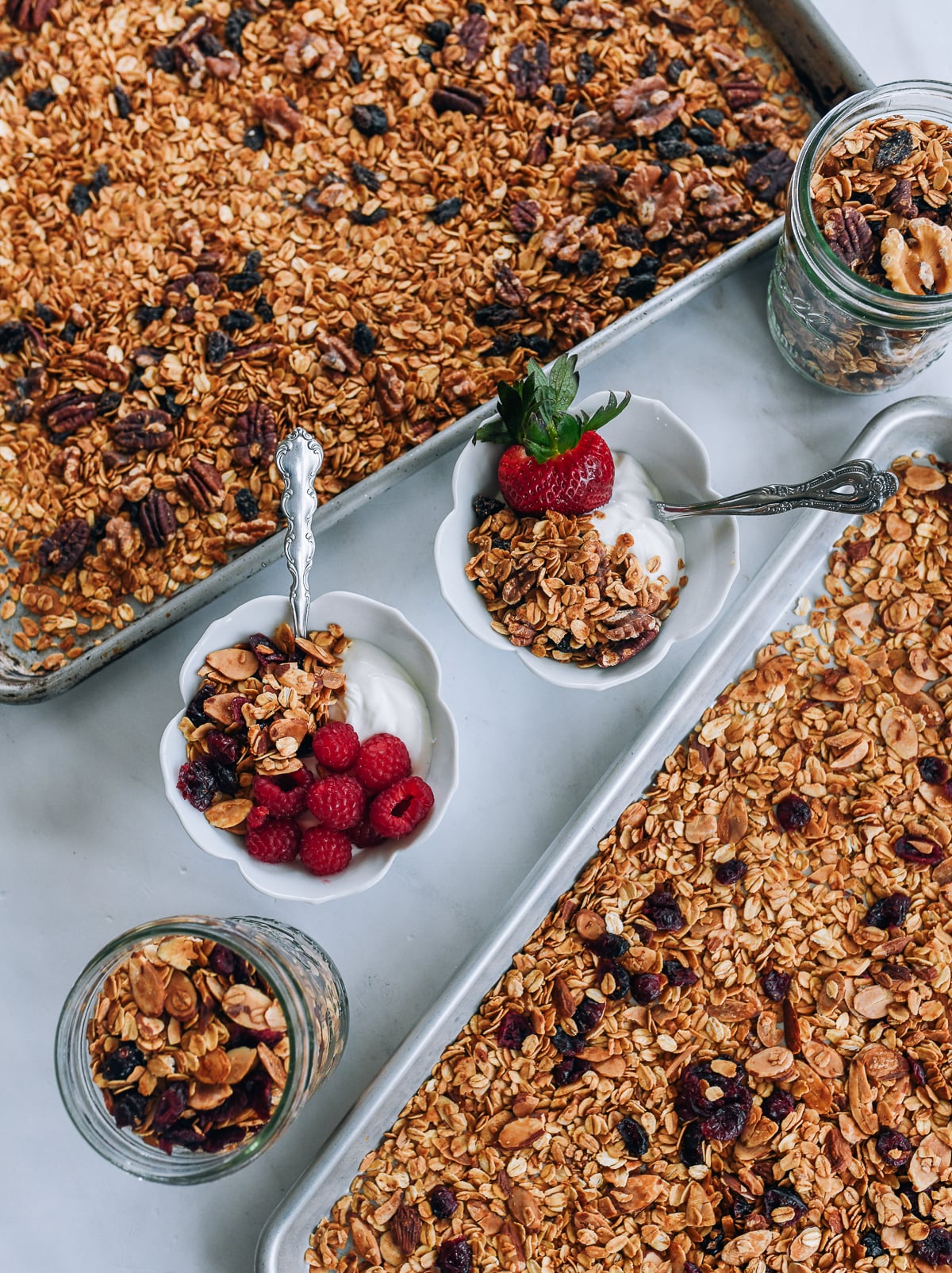
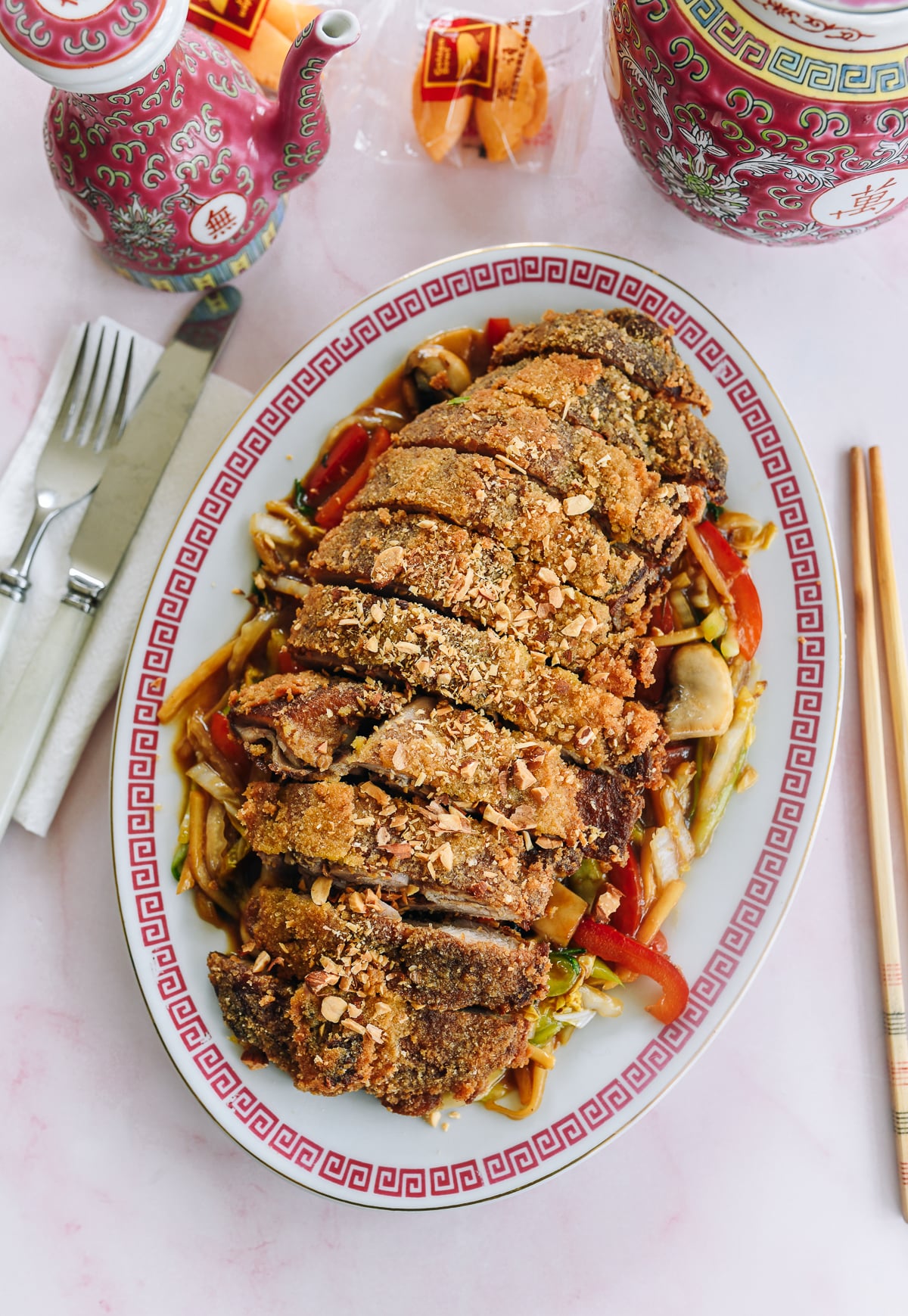
Chow Har KewChow Har Kew is a luxurious version of a Chinese Shrimp and Vegetable stir-fry, with crispy, golden shrimp! Deep-frying meats or proteins—in this case large shrimp—and then tossing them in a velvety sauce makes a Chinese-banquet-worthy dish.  The name Chow Har Kew is the way this dish usually appears in English on Chinese restaurant menus, […]
[syndicated profile] techknitting_feed

Posted by TECHknitter

I'm supposed to be in the middle of a series about weird new ways of double-knitting, and there is more coming up. But, until recently, the 'flu had hold of me. So, until my wits fully return, here is a fill-in post on a different and simpler subject, a quick and pretty way to bind off  K1, P1 ribbing.A  new KI, P1 ribbing bind-off (cast-off) for garments a: Outside, it's a tubular

Review: Paladin's Faith

Jan. 31st, 2026 08:54 pm
[syndicated profile] eagle_reviews_feed

Review: Paladin's Faith, by T. Kingfisher

Series: The Saint of Steel #4
Publisher: Red Wombat Studio
Copyright: 2023
ISBN: 1-61450-614-0
Format: Kindle
Pages: 515

Paladin's Faith is the fourth book in T. Kingfisher's loosely connected series of fantasy novels about the berserker former paladins of the Saint of Steel. You could read this as a standalone, but there are numerous (spoilery) references to the previous books in the series.

Marguerite, who was central to the plot of the first book in the series, Paladin's Grace, is a spy with a problem. An internal power struggle in the Red Sail, the organization that she's been working for, has left her a target. She has a plan for how to break their power sufficiently that they will hopefully leave her alone, but to pull it off she's going to need help. As the story opens, she is working to acquire that help in a very Marguerite sort of way: breaking into the office of Bishop Beartongue of the Temple of the White Rat.

The Red Sail, the powerful merchant organization Marguerite worked for, makes their money in the salt trade. Marguerite has learned that someone invented a cheap and reproducible way to extract salt from sea water, thus making the salt trade irrelevant. The Red Sail wants to ensure that invention never sees the light of day, and has forced the artificer into hiding. Marguerite doesn't know where they are, but she knows where she can find out: the Court of Smoke, where the artificer has a patron.

Having grown up in Anuket City, Marguerite was familiar with many clockwork creations, not to mention all the ways that they could go horribly wrong. (Ninety-nine times out of a hundred, it was an explosion. The hundredth time, it ran amok and stabbed innocent bystanders, and the artificer would be left standing there saying, "But I had to put blades on it, or how would it rake the leaves?" while the gutters filled up with blood.)

All Marguerite needs to put her plan into motion is some bodyguards so that she's not constantly distracted and anxious about being assassinated. Readers of this series will be unsurprised to learn that the bodyguards she asks Beartongue for are paladins, including a large broody male one with serious self-esteem problems.

This is, like the other books in this series, a slow-burn romance with infuriating communication problems and a male protagonist who would do well to seek out a sack of hammers as a mentor. However, it has two things going for it that most books in this series do not: a long and complex plot to which the romance takes a back seat, and Marguerite, who is not particularly interested in playing along with the expected romance developments. There are also two main paladins in this story, not just one, and the other is one of the two female paladins of the Saint of Steel and rather more entertaining than Shane.

I generally like court intrigue stories, which is what fills most of this book. Marguerite is an experienced operative, so the reader gets some solid competence porn, and the paladins are fish out of water but are also unexpectedly dangerous, which adds both comedy and satisfying table-turning. I thoroughly enjoyed the maneuvering and the culture clashes. Marguerite is very good at what she does, knows it, and is entirely uninterested in other people's opinions about that, which short-circuits a lot of Shane's most annoying behavior and keeps the story from devolving into mopey angst like some of the books in this series have done.

The end of this book takes the plot in a different direction that adds significantly to the world-building, but also has a (thankfully short) depths of despair segment that I endured rather than enjoyed. I am not really in the mood for bleak hopelessness in my fiction at the moment, even if the reader is fairly sure it will be temporary. But apart from that, I thoroughly enjoyed this book from beginning to end. When we finally meet the artificer, they are an absolute delight in that way that Kingfisher is so good at. The whole story is infused with the sense of determined and competent people refusing to stop trying to fix problems. As usual, the romance was not for me and I think the book would have been better without it, but it's less central to the plot and therefore annoyed me less than any of the books in this series so far.

My one major complaint is the lack of gnoles, but we get some new and intriguing world-building to make up for it, along with a setup for a fifth book that I am now extremely curious about.

By this point in the series, you probably know if you like the general formula. Compared to the previous book, Paladin's Hope, I thought Paladin's Faith was much stronger and more interesting, but it's clearly of the same type. If, like me, you like the plots but not the romance, the plot here is more substantial. You will have to decide if that makes up for a romance in the typical T. Kingfisher configuration.

Personally, I enjoyed this quite a bit, except for the short bleak part, and I'm back to eagerly awaiting the next book in the series.

Rating: 8 out of 10

[syndicated profile] scalziwhatever_feed

Posted by Athena Scalzi

Though I am a bougie bitch, there’s nothing quite like a mug full of Swiss Miss hot chocolate. I am an especially big fan of their Marshmallow flavor, so you can imagine my shock when I learned about their Marshmallow Lovers flavor that comes with even more dehydrated white chalk block marshmallows.

I’m willing to bet you didn’t even realize there were two different Marshmallow varieties of Swiss Miss to choose from. Aren’t you so glad I taught you something useful?

Anyways, I, as a Marshmallow lover, decided to see which Marshmallow Swiss Miss variety was superior. Were there enough marshmallows in the Marshmallow flavor to sate my love of them, or did I need to purchase the Marshmallow Lovers box?

Using a digital scale and some math (not easy for me), I have come up with some numbers for your consideration.

So, if you went to Kroger right now and were wanting to buy just a regular, standard size pack of hot chocolate, you’d have your choice between an 8-pack of the Marshmallow Swiss Miss, and a 6-pack of the Marshmallow Lovers Swiss Miss. Both are currently listed as selling for $2.99. I’m sure you’re wondering, well why does the lovers pack have two fewer envelopes than the regular Marshmallow pack? It’s actually because each hot chocolate packet in the Marshmallow Lovers box comes attached to a separate packet that contains the marshmallows, whereas the regular Marshmallow packs have the marshmallows in the hot chocolate envelope rather than being a separate entity.

Anyways, I decided to rip each of one open and weigh them out.

I went with the Marshmallow Lovers packet first. After zeroing out a bowl on a digital scale, I dumped only the contents of the hot chocolate packet into the bowl. The powder came out to 40 grams. I then threw in the marshmallows. The total weight was now 45 grams. A whopping 5 grams of marshmallows in the Marshmallow Lovers packet.

I zeroed out a new bowl so there was no residual powder to contribute to the weight of the Marshmallow packet. I dumped it in the new bowl, then carefully removed each marshmallow from the powder so I could weigh the powder alone first. 38 grams of powder. I threw the marshmallows back in. 39 grams.

I could hardly believe my eyes. A measly one gram of marshmallows in the Marshmallow pack? It felt like too little, but if you go for the upgrade of the Marshmallow Lovers, you lose out a whole two envelopes!

If you add it all up, in the entire Marshmallow box, there is 304 grams of hot chocolate, and 8 grams of marshmallows. For the Marshmallow Lovers, we’re looking at 240 grams of hot chocolate, and 30 grams of marshmallows. 25% less powder, but almost 4 times the amount of marshmallows. Is it worth it to buy the Marshmallow Lovers package? It’s tough to say.

Part of me is tempted to buy the Marshmallow Lovers package just so Swiss Miss knows there’s someone out there that loves their marshmallows. They have to see demand if I want them to keep making it, right?

On the other hand, I could just buy regular Swiss Miss and put my own marshmallows in it. I don’t need Swiss Miss to supply me with their little freaky mallows, I can just throw mini Jet-Puffed marshies in any cup of hot chocolate I want, and as many as I want. I am not limited to a mere one or even five grams.

For now, I will drink the Marshmallow one, because the 30-pack of it was selling for a really good price, so it just made sense to get the bulk box. I will absolutely go through it all.

Do you like hot chocolate? What do you like to top yours with? Have you tried the Marshmallow Lovers variety yourself? Let me know in the comments, and have a great day!

-AMS

Review: Dragon Pearl

Jan. 30th, 2026 09:26 pm
[syndicated profile] eagle_reviews_feed

Review: Dragon Pearl, by Yoon Ha Lee

Series: Thousand Worlds #1
Publisher: Rick Riordan Presents
Copyright: 2019
ISBN: 1-368-01519-0
Format: Kindle
Pages: 315

Dragon Pearl is a middle-grade space fantasy based on Korean mythology and the first book of a series.

Min is a fourteen-year-old girl living on the barely-terraformed world of Jinju with her extended family. Her older brother Jun passed the entrance exams for the Academy and left to join the Thousand Worlds Space Forces, and Min is counting the years until she can do the same. Those plans are thrown into turmoil when an official investigator appears at their door claiming that Jun deserted to search for the Dragon Pearl. A series of impulsive fourteen-year-old decisions lead to Min heading for a spaceport alone, determined to find her brother and prove his innocence.

This would be a rather improbable quest for a young girl, but Min is a gumiho, one of the supernaturals who live in the Thousand Worlds alongside non-magical humans. Unlike the more respectable dragons, tigers, goblins, and shamans, gumiho are viewed with suspicion and distrust because their powers are useful for deception. They are natural shapeshifters who can copy the shapes of others, and their Charm ability lets them influence people's thoughts and create temporary illusions of objects such as ID cards. It will take all of Min's powers, and some rather lucky coincidences, to infiltrate the Space Forces and determine what happened to her brother.

It's common for reviews of this book to open with a caution that this is a middle-grade adventure novel and you should not expect a story like Ninefox Gambit. I will be boring and repeat that caution. Dragon Pearl has a single first-person viewpoint and a very linear and straightforward plot. Adult readers are unlikely to be surprised by plot twists; the fun is the world-building and seeing how Min manages to work around plot obstacles.

The world-building is enjoyable but not very rigorous. Min uses and abuses Charm with the creative intensity of a Dungeons & Dragons min-maxer. Each individual event makes sense given the implication that Min is unusually powerful, but I'm dubious about the surrounding society and lack of protections against Charm given what Min is able to do. Min does say that gumiho are rare and many people think they're extinct, which is a bit of a fig leaf, but you'll need to bring your urban fantasy suspension of disbelief skills to this one.

I did like that the world-building conceit went more than skin deep and influenced every part of the world. There are ghosts who are critical to the plot. Terraforming is done through magic, hence the quest for the Dragon Pearl and the miserable state of Min's home planet due to its loss. Medical treatment involves the body's meridians, as does engineering: The starships have meridians similar to those of humans, and engineers partly merge with those meridians to adjust them. This is not the sort of book that tries to build rigorous scientific theories or explain them to the reader, and I'm not sure everything would hang together if you poked at it too hard, but Min isn't interested in doing that poking and the story doesn't try to justify itself. It's mostly a vibe, but it's a vibe that I enjoyed and that is rather different than other space fantasy I've read.

The characters were okay but never quite clicked for me, in part because proper character exploration would have required Min take a detour from her quest to find her brother and that was not going to happen. The reader gets occasional glimpses of a military SF cadet story and a friendship on false premises story, but neither have time to breathe because Min drops any entanglement that gets in the way of her quest. She's almost amoral in a way that I found believable but not quite aligned with my reading mood. I also felt a bit wrong-footed by how her friendships developed; saying too much more would be a spoiler, but I was expecting more human connection than I got.

I think my primary disappointment with this book was something I knew going in, not in any way its fault, and part of the reason why I'd put off reading it: This is pitched at young teenagers and didn't have quite enough plot and characterization complexity to satisfy me. It's a linear, somewhat episodic adventure story with some neat world-building, and it therefore glides over the spots where an adult novel would have added political and factional complexity. That is exactly as advertised, so it's up to you whether that's the book you're in the mood for.

One warning: The text of this book opens with an introduction by Rick Riordan that is just fluff marketing and that spoils the first few chapters of the book. It is unmarked as such at the beginning and tricked me into thinking it was the start of the book proper, and then deeply annoyed me. If you do read this book, I recommend skipping the utterly pointless introduction and going straight to chapter one.

Followed by Tiger Honor.

Rating: 6 out of 10

Itty bitty

Jan. 30th, 2026 09:44 pm
[syndicated profile] yarn_harlot_feed

Posted by Stephanie Pearl-McPhee

I am in limbo – I just finished my SISC socks, they’re off the needles and gone for a bath, and I don’t pull the next bag until the 1st of the month so I’ve got the littlest of sock breaks. I’m working on that Craghill Shawl but it doesn’t have a deadline and I’m under-motivated. The rows are getting long and I think I’m into a cheaper thrill right now.

I am really, really motivated to make a baby set but the yarn hasn’t arrived (I think it might today) and once that happens I am all in on that, since the baby might have gotten slightly ahead of me there. I need to start a sweater for Elliot (he has a special request) but the yarn for that is en route as well. I was about to wander aimlessly upstairs and turn my attention to one of the multitude of projects I’ve put down over the last months, when I thought to have a look at “The Big Plan.”

The Big Plan™ is far less fancy (or big, or trademarked) than it sounds, but like the Self-Imposed Sock Club (SISC) and The Long Range Planning Box for completed items, it’s one of my better ideas. You know how you’ll be minding your own business and you’ll see a project or have an idea or remember there’s an occasion coming up and you think “oh, I’ve got to get on that this year”. When that happens to me, I open my phone or computer and go to a note called “The Big Plan” and jot down whatever it happens to be. On there right now is a sewing project I don’t want to forget to get ahead on for next Christmas, and a note that a friend who makes soap could use some hand knit facecloths for her birthday, some ornaments I want to give as a Hallowe’en gift that it would be smart to make in the summer, that I need to gather pinecones for something else -whenever I see them through the year, and that (and this is that part that is relevant to this post) this is a year I have to knit and make another Advent Calendar, and that it would be super smart to knit a few of the ornaments each month so that it can’t get on top of me. (There’s also a note to buy the felt to make it when I see it on sale but that’s not as important to you.)

So- in this perfect moment of in-betwixt idleness, I’m going to fill my needles with a few of those little things and tuck them away (in The Long Range Planning Box, obviously) so that November Stephanie has only nice things to say about me.

If you’d like to play along, today I’m making a teeny hat and a maybe a tiny sock. I bet the baby sweater yarn is here when I’m done.

[syndicated profile] scalziwhatever_feed

Posted by John Scalzi

Yesterday evening, I and author, political candidate and former NFL player Chris Kluwe got together at Ann Arbor’s Downtown Library to talk about books, libraries, politics and the general state of the world, among other topics. And they recorded it! And put it on the Internet! And you can see it above. The conversation starts at about the 8:50 minute mark and runs about an hour, including audience Q&A. Enjoy.

A Quick Thank You To A Kind Reader!

Jan. 29th, 2026 10:00 pm
[syndicated profile] scalziwhatever_feed

Posted by Athena Scalzi

Hey, everyone! I just wanted to take a moment to thank a reader who sent me some very lovely spices from Penzey’s. It really made my day to open a package I wasn’t expecting and get something so awesome!

Two variety boxes of Penzey's spices, each containing eight glass spice jars. Plus one free sample packet!

So many commenters have recommended this spice brand to me, so I’m stoked to try it out finally. Also, I didn’t realize they were glass jars until I actually touched them. The fact that they’re glass just makes them so much better, honestly, like how aesthetic and nice is that?

Gift giving is my love language, so it really means so much to me that someone thought of me enough to send such a kind gift. A truly perfect housewarming gift!

I won’t name them in the post, in case they don’t want the attention, but if it was you please feel free to claim your glory in the comments, you rock!

Can’t wait to whip something up with these spices, especially the more unique ones.

-AMS

The Big Idea: Miles Cameron

Jan. 29th, 2026 05:56 pm
[syndicated profile] scalziwhatever_feed

Posted by Athena Scalzi

Author Miles Cameron is here today to introduce you to book number one of his space opera series. Though the first of many to come, there’s plenty of spaceships, drama, and war to go around, so strap in for the Big Idea of Artifact Space.

MILES CAMERON:
In 2018, I was sitting at a small SFF con in London with Alistair Reynolds, one of my favourite all-time Science Fiction authors, and I confess I was being a bit of a fan boy, telling him all about what I loved in his books, and he waited me out and then said something to the effect of ‘I hear you spent time on an aircraft carrier.’ The two of us then chatted away for half an hour about life on a carrier and how much we both thought it might be the closest thing to life on a big spaceship, when my editor (up until then I mostly wrote historical fiction and fantasy) turned around in her seat and said, ‘I’d buy that.’
When you are an author, these are very important words. I marked them down. I began to consider how I’d write a science fiction novel loosely based on ‘life on an aircraft carrier.’ Still, despite my military service, I wasn’t really interested in writing ‘military sci-fi’ per se, and I wrote myself some notes and—did other things.
A year later, I was writing a series of historical novels based in fifteenth century Venice and I became fascinated by the idea that Venice—a maritime state—built enormous (for 1450) galleys that carried on most of the trade with the Islamic world, travelling for months and even years on pre-determined routes that linked far-off lands like England and Egypt. I loved the idea that these Venetian seamen would, in the same trip, see so many disparate societies.
These ships doubled, in time of war, as major fleet elements. The idea of combined trade and military fascinated me, and Venice fascinates me still, and there it was—Great Galleys, like spaceborn aircraft carries, on long trade missions to the stars. I mean, there it was, except that it lacked a story.
I have a belief that art makes art; some of my best ideas have come to me while watching a good live play, an opera, a ballet, or a movie. I’m not sure exactly why; there’s an element fo free-association to watching people perform, I suppose—but it always works for me, and in the case of Artifact Space I was watching Florence Pugh in ‘Little Women,’ the last time I went out before COVID and lockdown here in Toronto. I sat there, watching this wonderful performance of one of my favourite books from childhood, and suddenly it was all there. I knew how I would design the human sphere to reflect Venetian trade routes; I saw how I could have the book start in a futuristic Saint Mark’s Square (the heart of Medieval Venice) and I suddenly saw my protagonist and the arc of her story. I think one of the problems of my first ‘Big Idea’ was that the aircraft carrier wasn’t a story—it was an idea. Venice in space was an idea. Both were backdrops on the way to world building. I have the good fortune to be a second-generation author, and one of my father’s favourite sayings was ‘an idea is not a book.’ True words. The aircraft carrier was not a book. Even the idea of Venice in space was not a book.
But Marca Nbaro is a protagonist with a back story and a future arc, and putting her, via Florence Pugh playing Amy March, aboard a ten-kilometre spaceship trading with aliens—it all came in a second. I knew Marca, I knew where she was going and I knew the set of secrets at the heart of the series that would drive the action. I could see the events–alien contact, Artificial Intelligence and its possible flaws, and the difficulties of a trade empire suddenly forced to act as a polity in the face of threat and change.
Good stuff. Other writers have been there before; I’m a huge fan of C.J. Cherryh and she won a Hugo writing on similar themes in Downbelow Station, one of my favourite books of all time. But I had one more ‘Big Idea’ to toss into the mix, because politics interests me and we live, right now, in ‘Interesting Times.’ I wanted humanity to be trapped in someone else’s war, bit players in a larger play, forced to make society-altering decisions just to survive. I wanted to show change, the sort of change people my age have already seen sweeping over us; technological change, societal change, political change.
Interstellar trade, giant spaceships with thousands of crew, massive political change, Alien contact, and one somewhat battered orphan trying to find her place in the universe. Sitting in the theater as the lights came up, it was, I promise you, all one Big Idea.


Artifact Space: Amazon|Barnes & Noble|Bookshop|Powell’s

Author socials: Website|Bluesky|Instagram

[syndicated profile] scalziwhatever_feed

Posted by John Scalzi

When the history of the moment is said and done, there are going to be people who wished they had been on the same side as Bruce Springsteen and Billy Bragg, and some who will lie that they had always been. But they will know the truth, and so will others. It won’t be forgotten.

— JS

The Big Idea: Salinee Goldenberg

Jan. 28th, 2026 04:05 pm
[syndicated profile] scalziwhatever_feed

Posted by Athena Scalzi

When you have two great ideas, why not have them work together to get the best of both worlds in one story? Author Salinee Goldenberg decided to do just that for her new novel, Way of the Walker. Enjoy hearing about her process of combining these ideas in her Big Idea.

SALINEE GOLDENBERG:

‘In its bare reality, decolonization reeks of red-hot cannonballs and bloody knives. For the last can be the first only after a murderous and decisive confrontation between the two protagonists. This determination to have the last move up to the front, to have them clamber up (too quickly, say some) the famous echelons of an organized society, can only succeed by resorting to every means, including, of course, violence.’

-Franz Fanon, The Wretched of The Earth 1961

There were two ravenous wolves of ideas within me when I sat down to write Way of the Walker. In one corner, we have an anti-colonialist war epic inspired by the late Rattanakosin era of Siam and the surrounding conquest of Southeast Asia by western powers. In the other, a character study, an anti-hero saga starring our headstrong protagonist Isaree, an estranged phi hunter on a journey of self discovery, defined by her uncompromising morals and a mission to administer the justice she sees absent in the world.

These two Big Ideas circled the story, which at times, frantically evaded capture, a juicy, nimble deer that refused to be devoured completely by one or the other. I needed to force my two hungry wolves to politely share this meal — to collaborate on its consumption in a viably publishable amount of words. Even though Way of the Walker is a stand alone, the real life inspiration behind the world of Suyoram began with my first novel, The Last Phi Hunter, a dark fantasy adventure inspired by Thai culture, folklore, Buddhism, and mythology. I didn’t want just a snapshot into a fantastical world, I wanted it to feel alive. A living world breathes, grows, dies, evolves… so I explored the effects of modernization in rural lands, the nostalgia of fading traditions, the death of mysticism, the yearning for a life that never was. I dipped my toe into the historical inspirations behind the world of Suyoram, but for the heavy themes in Way of the Walker, there was no shallow end to wade into. I had to dive in headfirst. 

Something that deeply interested me has always been how Thailand avoided colonization throughout the centuries as competing European powers descended upon the resource rich region and violently established control. Fortuitously, Siam’s geographical location served as a buffer between the British Empire and French Indochina, but Monkut and his heir Chulalongkorn (King Rama IV and V, respectively) realized that subjugation would be inevitable without drastic action.  

They educated their nobility overseas, adapted western fashions and architecture, and passed democratic legal and social practices, to the extent that some historians contend that Siam “colonized itself” in order to be perceived as culturally equal by the encroaching imperialists. Through territorial concessions, policy reforms, and diplomatic ingenuity, Siam remained independent, and the name of the country was eventually changed to Thailand in 1939 — “Thai” literally translating to “free.”

However inspiring this was, I wasn’t interested in writing a court intrigue dense with complicated political discussions. I wanted action, magic, murder, romance, mayhem! So the historical set up was only a jumping off point for the second wolf to come in. The “Grisland” antagonists in Way of the Walker are a conglomeration of western-coded oppressors, and I pulled more inspiration from struggles for sovereignty not only from other Southeast Asian countries like Vietnam and Malaysia, but from all around the world —  Algeria, Cuba, Bolivia, Kenya, Palestine, and more — no colonized peoples are ever alone.

Revolutions arise from the oppressed, the working class, the people, which the protagonists from both books are — but Ex from The Last Phi Hunter wasn’t the right lead for this story. His daughter Isaree, however, has grown up in the shadow of atmospheric violence, and was the natural evolution for this point of history. The injustices she witnesses and a crisis of faith drive her to seek answers, to seek power, and ultimately, to strike back at the oppressors, despite the personal cost. She’s heroic, but flawed, and not without limitations. 

The worst of these limitations was a narratively practical one. Isaree is a viciously fun character to write, but she’s all predator, instinct and raw power, with one foot into the world of devas and spirits, but can’t tell a treaty from a roll of toilet paper. How do I dig into the meat of a decolonialist narrative if the protagonist has no framework for geopolitics, or international trade wars, or, well… that’s where the Big Idea splits into a secondary POV — the renegade prince sent to kill her, as a favor to appease the king’s allies. With this insider view, we see what Frantz Fanon calls the “colonist bourgeoisie” perspective, which was the mediator bridge I needed, and made for great drama.

I had big ideas for this novel, but it’s something I’ve wanted to explore for years, and I was hungry for it. When I made the last edits, and the pass pages went to print, I can honestly say my appetite was satiated, and I settled in for a two-day victory nap. So if you’re itching for an action-packed fantasy war epic with an angry yet hopeful bichaotic protagonist, and big contemplations of what it means to punch up with a fist full of magic and a heart full of rage, go check it out.


Way of the Walker: Amazon|Barnes & Noble|Books-A-Million|Bookshop|Powell’s

Author socials: Website|Instagram

Profile

readerjane: Book Cat (Default)
readerjane

August 2023

S M T W T F S
  12345
6789101112
13141516171819
202122 23242526
2728293031  

Most Popular Tags

Style Credit

Expand Cut Tags

No cut tags
Page generated Feb. 3rd, 2026 07:34 pm
Powered by Dreamwidth Studios